Saturday, 29 November 2025

Vergemount Park, D6


 An Bord Pleanála previously recognise the unique architectural quality of the houses and their distinctive three-part window composition — a key Art Deco design principle
"The loss its principal façade would result in a loss of historic fabric and would also diminish the special character and appearance of Vergemount park"

 I am a French national and have lived in Ireland for the past 20 years. Having read extensively and studied and worked with Art Deco architectural heritage internationally, I was pleased to find that Dublin contains a significant number of buildings from this period, although public awareness of their architectural value appears less developed than in some other European cities. To support a wider appreciation of this heritage, I established the Art Deco Dublin Website, a resource dedicated to documenting and promoting the city’s Art Deco architectural legacy. As an ATGI national tour guide, I regularly share information on Ireland’s tangible and intangible heritage with French-speaking visitors and international audiences.

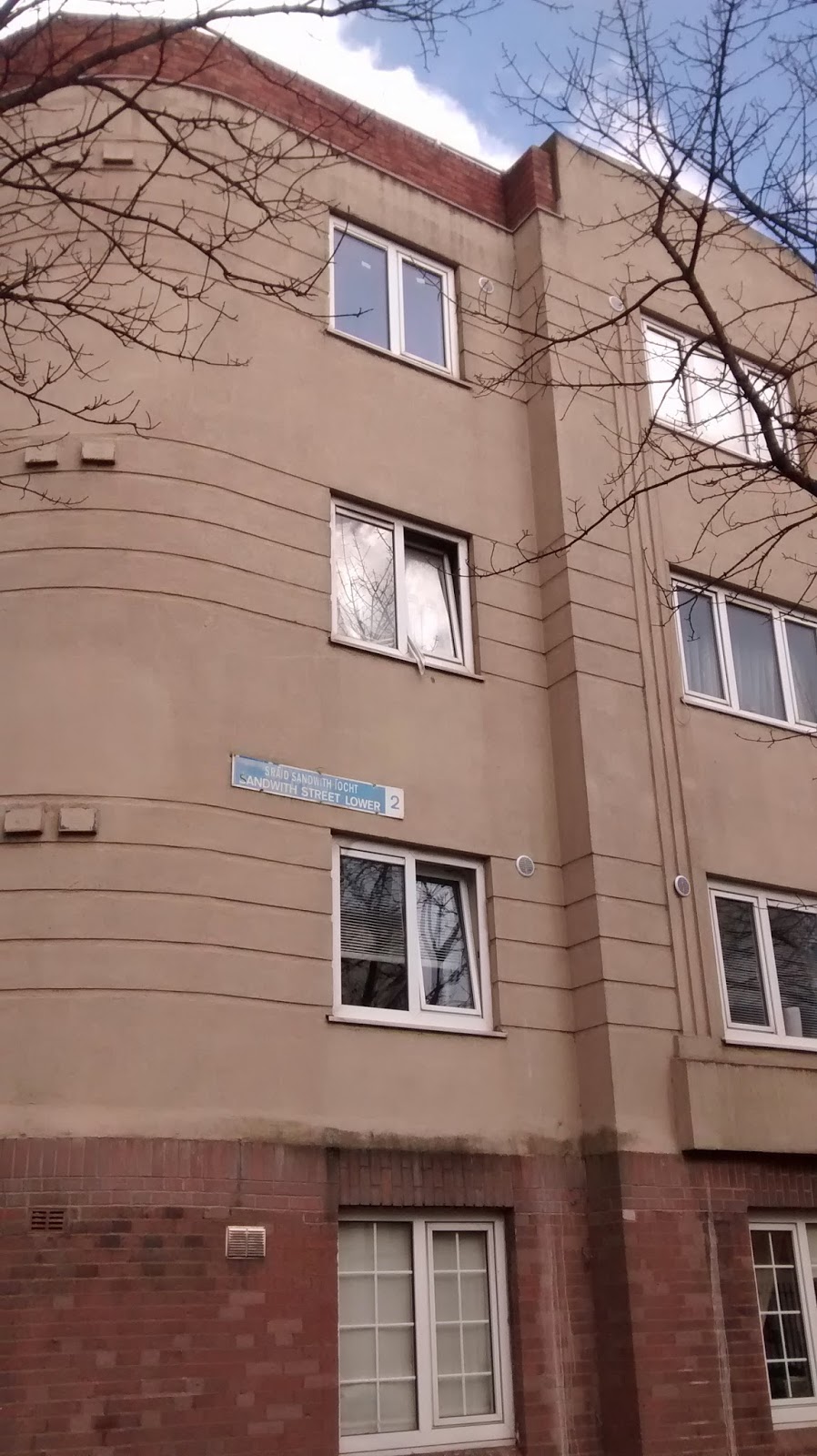
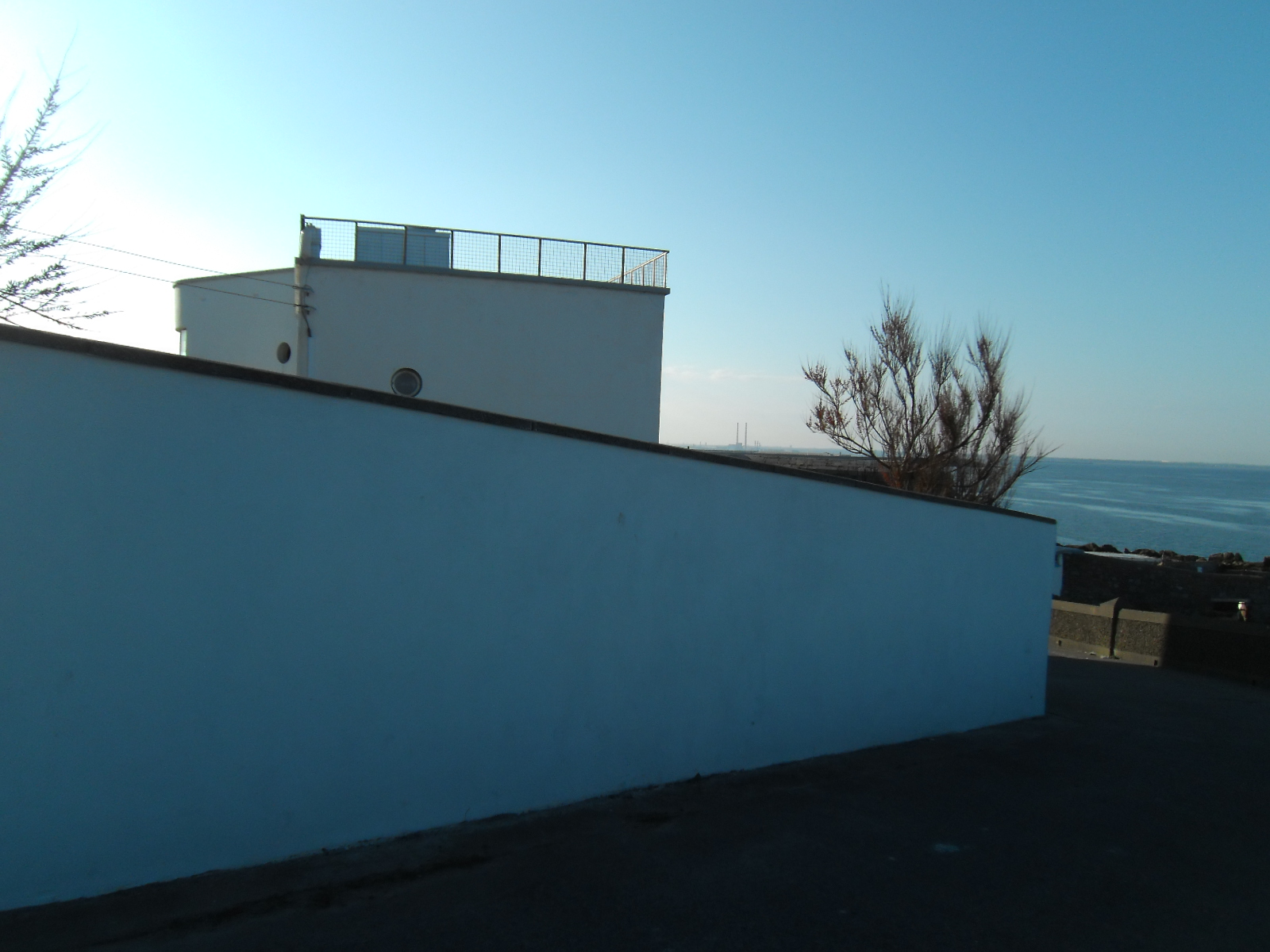
Art Deco architecture represents an important phase in the development of the Irish Free State, when Dublin City Council architects engaged with emerging international design movements, including through participation in planning congresses abroad. As a result, a diverse range of buildings were constructed during this period, influenced by European and international trends: the former Gas Building (showing Parisian influences), the former DIT building on Cathal Brugha Street (Amsterdamer style), the Department of Industry and Commerce with Gabriel Hayes’ sculptural work (expressionist), the former Archer Garage and Dublin Airport terminal (international style), and several significant social housing schemes based on the designs of Georges Simms (Amsterdamer style). Residential examples include Geragh in Sandycove, stretches of the Howth Road, and cul-de-sac developments such as Vergemount Park. Importantly, these buildings were primarily designed by Irish architects, contributing to a distinct national expression of the style.

The term “Art Deco”, formalised at a Paris exhibition in the 1960s, encompasses a broad family of architectural movements including Amsterdamer, stripped neoclassical, Jugendstil, cubism, international style, modernism, streamline, and Bauhaus. Ireland’s contribution to this global heritage reflects influences from the Celtic Revival and early Free State identity. Art Deco Dublin is affiliated with ICADS, the international organisation dedicated to Art Deco conservation.

In this context, Vergemount Park is a significant and cohesive example of early 20th-century domestic Art Deco design. Its architectural integrity and uniform streetscape character contribute meaningfully to the heritage of the area. For this reason, the proposed alterations at 4 Vergemount Park raise serious concerns. The design changes outlined in the No 4 Vergemount Park development application appear likely to disrupt the architectural rhythm, proportions, and stylistic coherence of the street. The proposals depart from the established Art Deco typology and would materially affect the legibility of the original design intent.

It is unclear, why a development of this nature would proceed without reference to conservation guidance or apparent consultation with the Dublin City Council Conservation Section, given the established architectural character of the street. Alterations of this scale risk diminishing the historic and architectural value of the wider setting.

My team at Art Deco Dublin, together with Art Deco specialists and volunteers, intends to support efforts to pursue Architectural Conservation Area (ACA) designation for Vergemount Park. We also recognise the work undertaken by Kevin and his local team, as well as by the DCC Conservation Team and the Irish Georgian Society, to protect this architecturally significant streetscape.


Thursday, 17 September 2020

Video on some Art Deco buildings in Dublin

Look at above videos
on some Art Deco 
buildings in Dublin


Herbert Georges Simms

Appointed housing architect to Dublin corporation in 1932 he designed around 17000 housing units within 16 years in Dublin city, Cabra and Crumlin. Have a stroll along Clontarf Promenade to see some other works such as the  wind shelters  and kiosk together with bathing shelters on  Bull island.

 His outstanding works in the Amsterdam school style are recorded as protected structures.,


Tuesday, 27 February 2018

Stella cinema in Rathmines

Opened last winter 2017 !
Sit in a comfortable armchair and enjoy  a great selection of films on the screen  or enjoy a cocktail at the bar in the former balcony!

Revamp from its ealiest Glory with a hint !


Tuesday, 11 April 2017

The former Tivoli cinema


The former Tivoli cinema built under the plan of the architect Vincent Kelly opened on the 21st of Dec 1934 and operated until 1964. Third largest cinema in Dublin was fitted with Philipps sound system.
Later in the 80s it was converted into a Theatre (auditorium for 500) and Music venue (1200) : Sinead O'Conor and many others had their concert in there.
The Tivoli staged lately music halls and  Pantos.
Located at 135-138 Francis street,  D8, in  the Antique shop street of Dublin it might  be demolished to built an aparthotel.


Monday, 14 March 2016

DIT 75th of Anniversary - Catha Brugha St

Robinson  and Keefe (a well know Irish Architect practice) undertook the design of the building located in Cathal Brugha Street, just off O'Connell Street in Dublin 1.
 The outstanding sculpture of Gabriel Hayes at the curvy corner  depicts the original studies in the College. Art Deco features can be traced in from the parapet roof line up to inside in the lobby(terrazzo floors, marble pilars,  fretworks on the side panels of  entrance door, stone canopy).
After five years of construction St Mary's College  opened officially on the 16th of June 1941 and in September young girls could start their education in Domestic Science. The education took a turn in the following years and is now the DIT  for  Hospitality Management Tourism and Culinary Arts and Food Technology with around 3000 students.From 1941 to 1973 three women were appointed as a first principal of the College.
 It will be relocated  by 2018 within the new campus of  Grangegorman .The building will be on sale for an estimated price of  €15-20 Million.

Sunday, 12 April 2015

Chancery Park

Let's enjoy the magnificent manicured Park with its Art Deco features: gates, benches and fountains.
Location : close to the Four Courts
Opening hours Mon to Thur  from 8am to 4pm, Frid 8am to 1pm.

Pearse House flats

 Designed by Herbert Simms 1933, the architect of Dublin Corporation. A magnificent council  housing  with 345 units, a big internal yard with playground for toddlers and teens together with a football  pitch and nice manicured garden.


Flat 3B in Pearse House Flats

Artist Jeanette Lowe had redecorated a flat to the time of the late 30s. Her grand-mother, Bridget Ashmore, was among the first to live in those flats. 2 bedrooms flat with fire place in each rooms, kitchen and bathroom in one single  room (the bathtub would have been the original one). Separate toilet  and a living/dining-room. Hardwood floor


Wednesday, 18 March 2015

Countess Markievicz house in Townends street D2


Add caption
Countess Markievicz house is part of  Herbert Georges SIMMS ' legacy built around 1934-39
U-shape 4-storey public housing  in red and yellow bricks with awesome tower gate canopied entrances and curved end building.Each flat gives on a communal balcony facing the central courtyard where  children have their playground
8 blocks with 170 flats and 4 shop units


sources: "The buildings" of Ireland from Christine Casey
Geroge' s quay local area plan 2012 - Dublin city 
Georges Simms

Tuesday, 12 November 2013

Gas Building

As you can see on the pictures below, some of the  artefacts belonging to the building have been taking away : sunburst grid and the G logo!
The polished black granit at the bottom of the window is broken.
This building is one of the finest Art Deco building in Dublin, which has been remodelled by the architects Robinson and Keefe in 1931/34.


Saturday, 10 August 2013

Alert : Buildings at risk!

Cinema RIALTO

former Cinema RIALTO 357/9 South circular road, Dublin 8
Designed by Frederick James Macaulay
Opened on the 5th of November 1936 and closed on the 28th of August 1970
Auditorium of 1500 seats, single screen, balcony and cloakrooms
Parking for 200 cars
Art Deco feature with stepped motif along the roofline and on pilasters. White paint on brick-clad structure.
At its opening with the Irish premiere "Everthing is Rhythm", it offered a red plush interior for its 1500 viewers.
It was owned and managed by Maurice Baum (Dublin Cinemas Ltd) and passed to the Green Group in the 1960s.
It was sold in 1971 for 50,000 Irish Pound to Windsor Motors who converted it into a car dealership. Since Summer 2006 the building has been put up for sale with the option of redeveloping the site and will be subject to demolition.
photo@ Cinema Heritage Group


Cinema CARLTON


Former Carlton cinema located 56-58 Upper O'Connell Street, Dublin 1 - RPS ref 6025
Architect :Robinson and Keefe 
Opened  16th of April 1938 closed  on the 20th of October 1994.
Its opening film "The Awful Truth" with Irene Dunn and Cary Grant.
This building replaced an earlier 600 seats cinema of same name designed by T.F. Mac Namara in 1915.

Auditorium of 2000 seats  (1500 in the stalls and 500 in the circle) , single screen, a stage, a dressing room, a cafe  and a  restaurant  (offering special meal and deals)
Art Deco features: 
Stripped Classical , big vertical windows with wrought iron work, pair of torches and  the CARLTON illuminated with  a neon light.
The American-style box office with Celtic decors and the interiors disappeared. "This was in a plain Deco style, which relied on plain colored paint and on lighting for effect, but which featured two very large panels, one on each side of screen, showing styilized musical instruments in gold in a tiled type pattern of 20 tiles, five panels across and four down, with some pattern repeats.
In Feb 1957  Bill Haley and his Comets played for three weeks in their  European Premiere  "Rock around the clock".

In 1976 it was subdivided in 3 auditoriums and the restaurant converted also in 126 seats. In the 70s  horrors films were frequently screened therefore it was called the HORROR house."

Early 2000 part of the Carlton Cinema was converted  into a 4D 18 seater motion Theater owned by Dr Quirkeys

Planning permission in Jan 1995 National Convention Centre and Casino and then in 2008 escaping being dismantled and relocated some distance to make way for the ill-fated 'Park in the Sky' redevelopment (retail/apart units and anchor store). The Irish Georgian Society made an appeal against Dublin City Council against the proposal to relocate a protected structure.
photo@Archiseek (first Carlton1915-1936)


photo@Dublin city Public Libraries


Hig Spec one off Wendon house 1929/30


Former "Wendon" - Balnagowan house  , 3 Saint Mobhi Boithirin , Glasnevin, D9 - No RPS
Private house of Georges Malcolm Linzell, a Dubliner developper, designed by Harold Greenwood. It was fitted with  cutting edge technology at the time. Lately headquarter of the Central Fisheries Board from 1971.

Sunday, 15 April 2012

inaugural meeting on Art Deco Dublin

Inaugural Meeting
Art Deco in Dublin is a community group encouraging Appreciation and Conservation of Art Deco Buildings and strengthening knowledge of Ireland’s Artistic and Cultural Heritage.
On Facebook : Art Deco Dublin

The meeting will aim to set up a voluntary organisation and find active supporters to organize a festival, walking tours....

We would like to gather with all Art Deco enthusiasts and experts to join efforts to RECORD and PRESERVE the architectural, cultural and social aspects of ART DECO era (1920-40s).
Venue:       The Irish Architectural Archive
                   45 Merrion Square
                   Dublin 2
Date:          Tuesday the 15th of May, 2012
Time:          11am
As places are limited, booking is required dublinartdeco@gmail.com